

Introduction
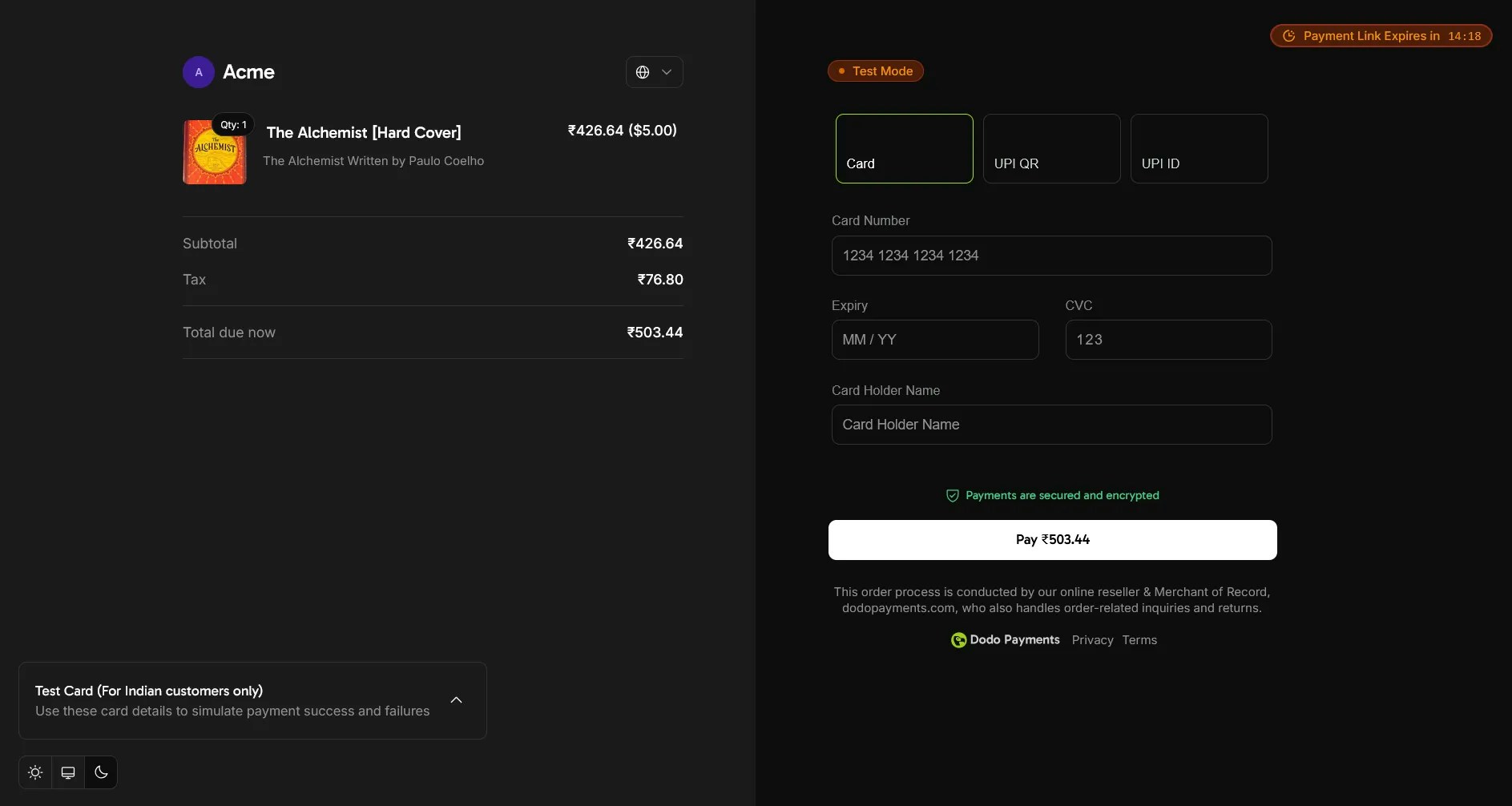
The Dodo Payments for WooCommerce plugin adds Dodo Payments as a payment method to your store’s checkout. Customers pay on the Dodo Payments checkout page, which shows the payment methods available for their location, currency, and device, such as cards, digital wallets, and UPI. Webhooks from Dodo Payments then update the order status in WooCommerce.The plugin requires WordPress 6.1 or later, PHP 7.4 or later, and WooCommerce 7.9 or later. To sell subscriptions, you also need the WooCommerce Subscriptions extension.
Step-by-Step Installation Guide
-
Download
dodo-payments-for-woocommerce.zipfrom the latest release on GitHub.You can also install the plugin from the WordPress plugin directory. On the Add Plugins page, search for Dodo Payments for WooCommerce, click Install Now, then click Activate, and continue with the configuration guide.Download Plugin
WordPress Plugin Directory
- Log in to your WordPress site as an administrator. WooCommerce must be installed and active.
-
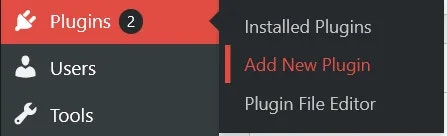
Go to Plugins → Add New Plugin.
-
Click Upload Plugin. An upload form appears.

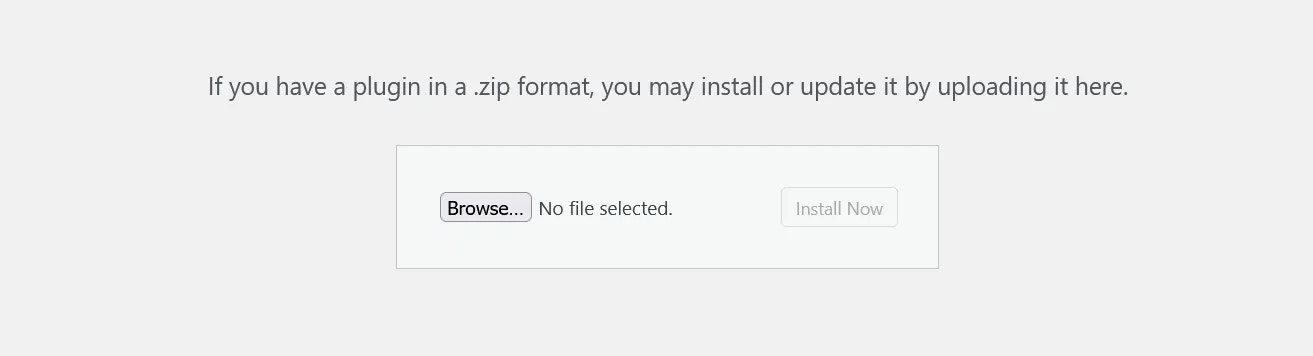
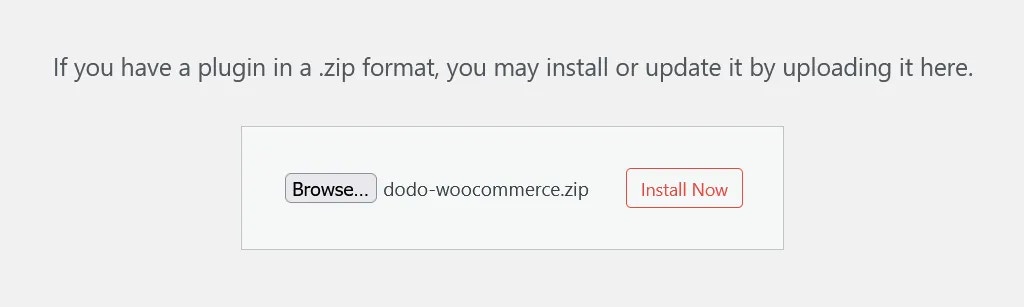
- Click Browse… and select the zip file you downloaded.
-
Click Install Now.
-
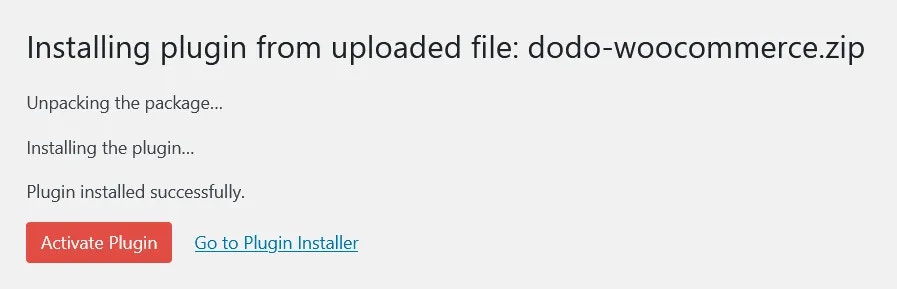
When the installation finishes, click Activate Plugin. You can also activate the plugin later from Plugins → Installed Plugins.
- The plugin is installed but not configured yet. Continue with the configuration guide below.
Configuration Guide
Setting Up API Keys and Webhooks
The plugin needs two values from each Dodo Payments mode: an API key to create checkouts, and a webhook signing key to verify the webhooks that update your orders. These steps set up live mode.-
Go to WooCommerce → Settings → Payments, or click Payments under WooCommerce in the sidebar.
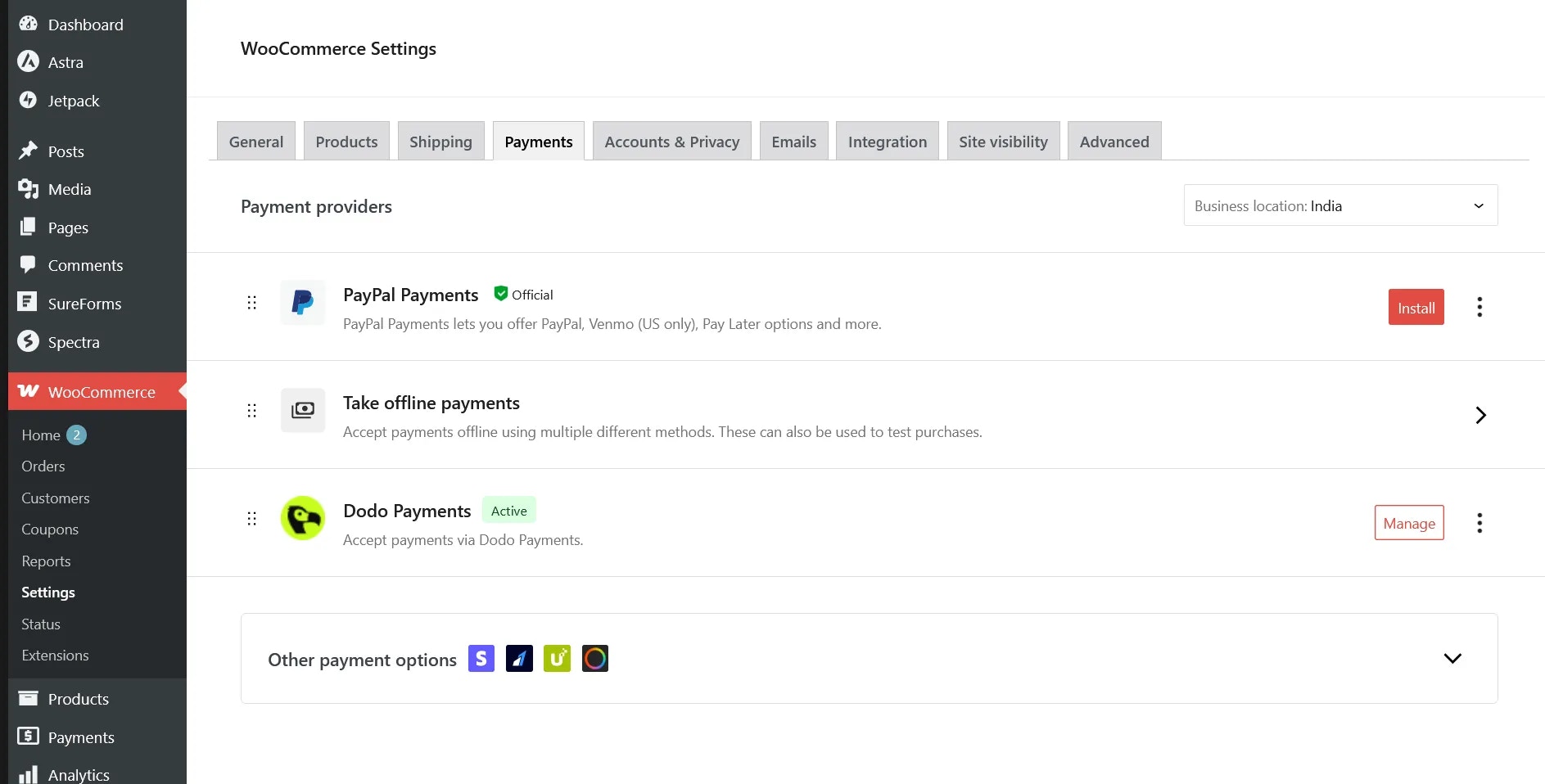
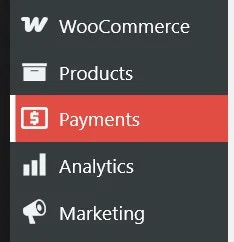
- Turn on Dodo Payments if it isn’t active, then click Manage.
-
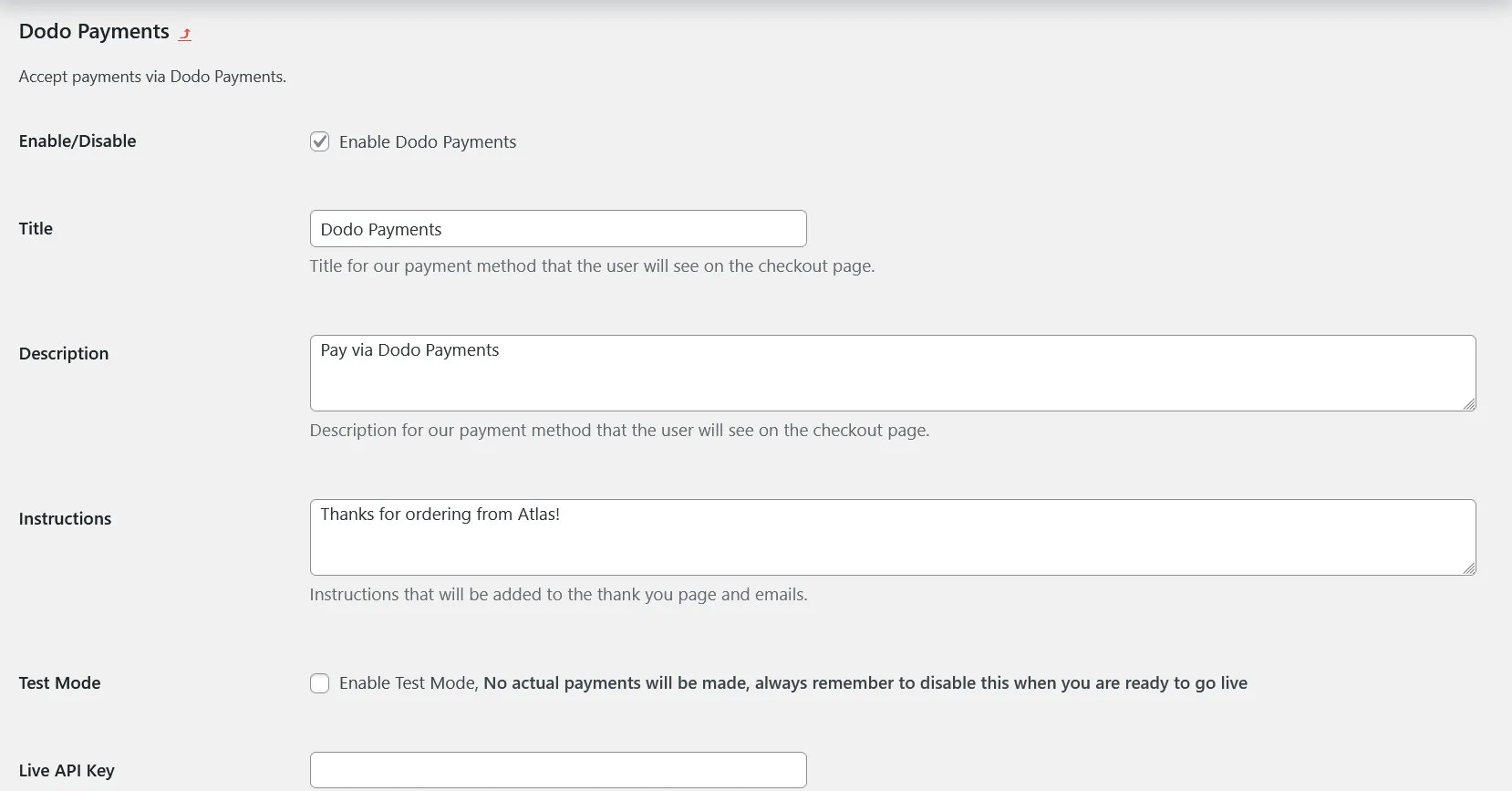
The plugin settings open, with a description under each option. Check that Enable Dodo Payments is selected, then start with Live API Key.
-
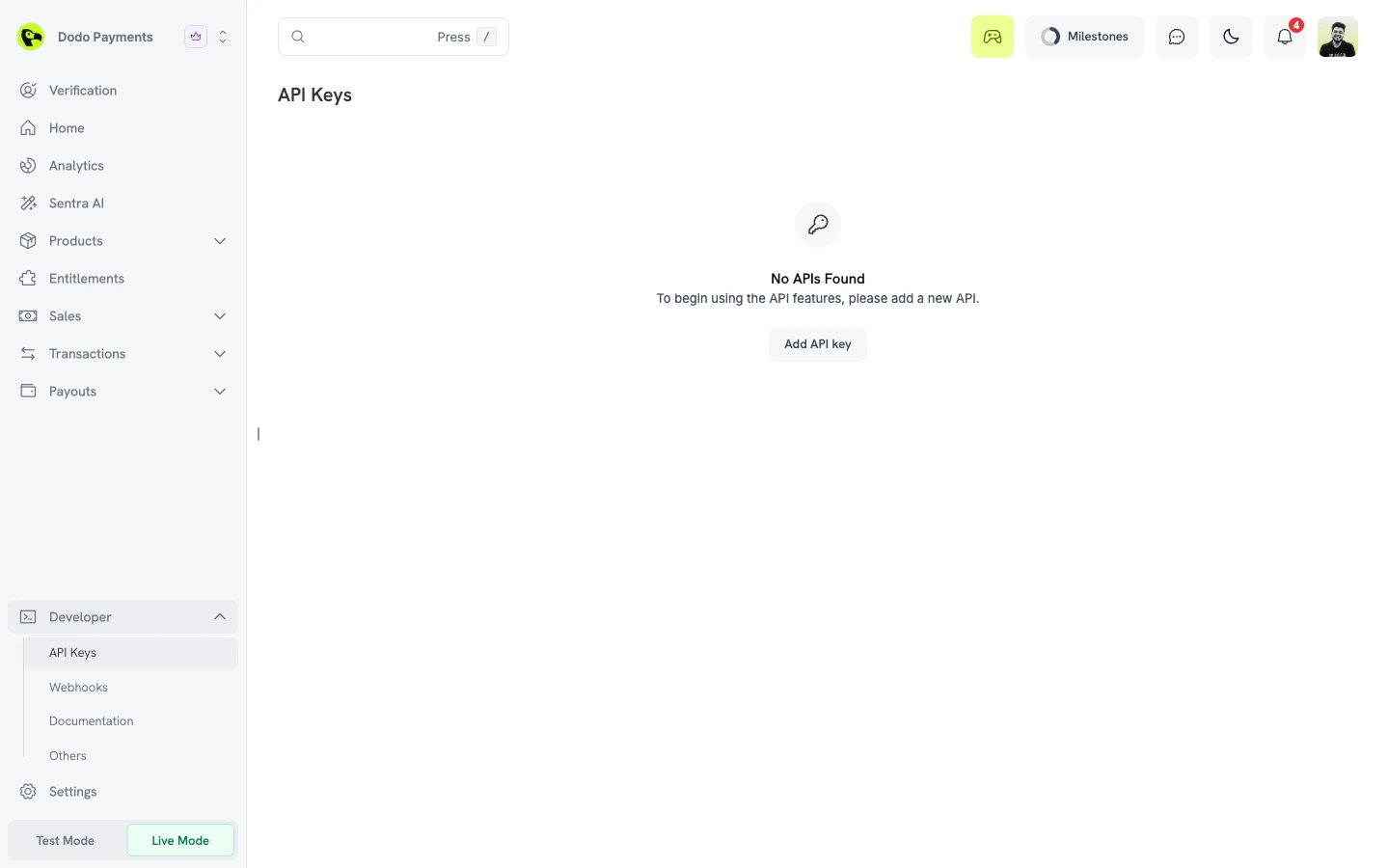
In the Dodo Payments dashboard, turn on the Live Mode switch in the sidebar. Go to Developer → API Keys, or use this direct link, and click Add API key.
-
Enter a name for the key, such as
WooCommerce Plugin, and click Create.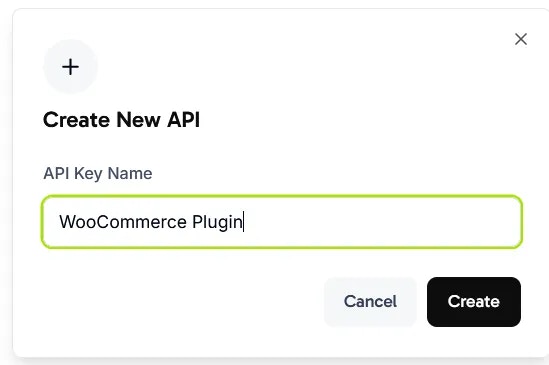
-
Click Copy API Key. The dashboard shows the key only once. Paste it into Live API Key in the plugin settings.
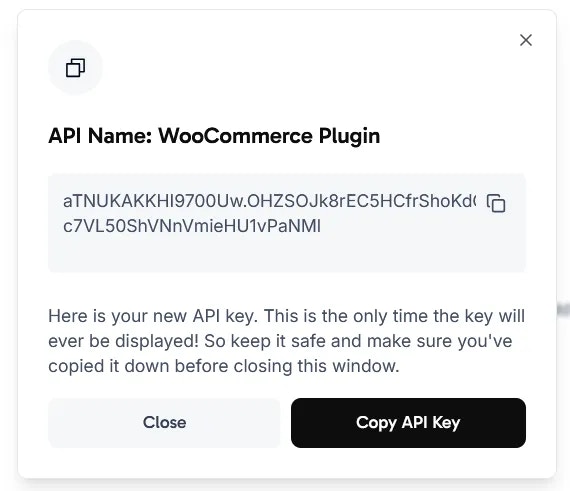

- Next, set up the webhook signing key. Dodo Payments sends payment updates to your store by webhook, and the plugin uses the key to verify that each webhook comes from Dodo Payments.
-
In the plugin settings, find Webhook Endpoint directly under the webhook signing key fields, and click Copy next to the URL. It has the form
https://your-store.com/?wc-api=dodo_payments. In plugin versions before 0.6.0, the URL is at the bottom of the settings page.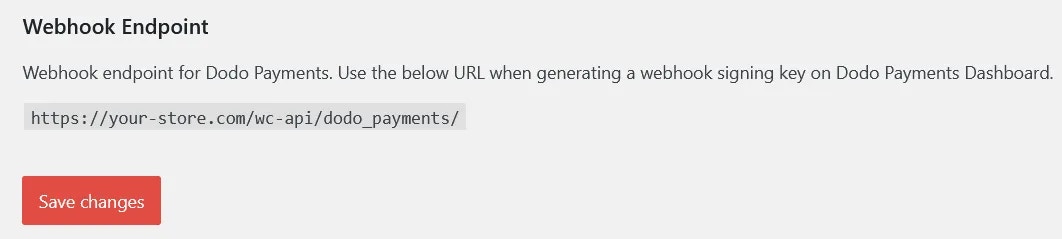
-
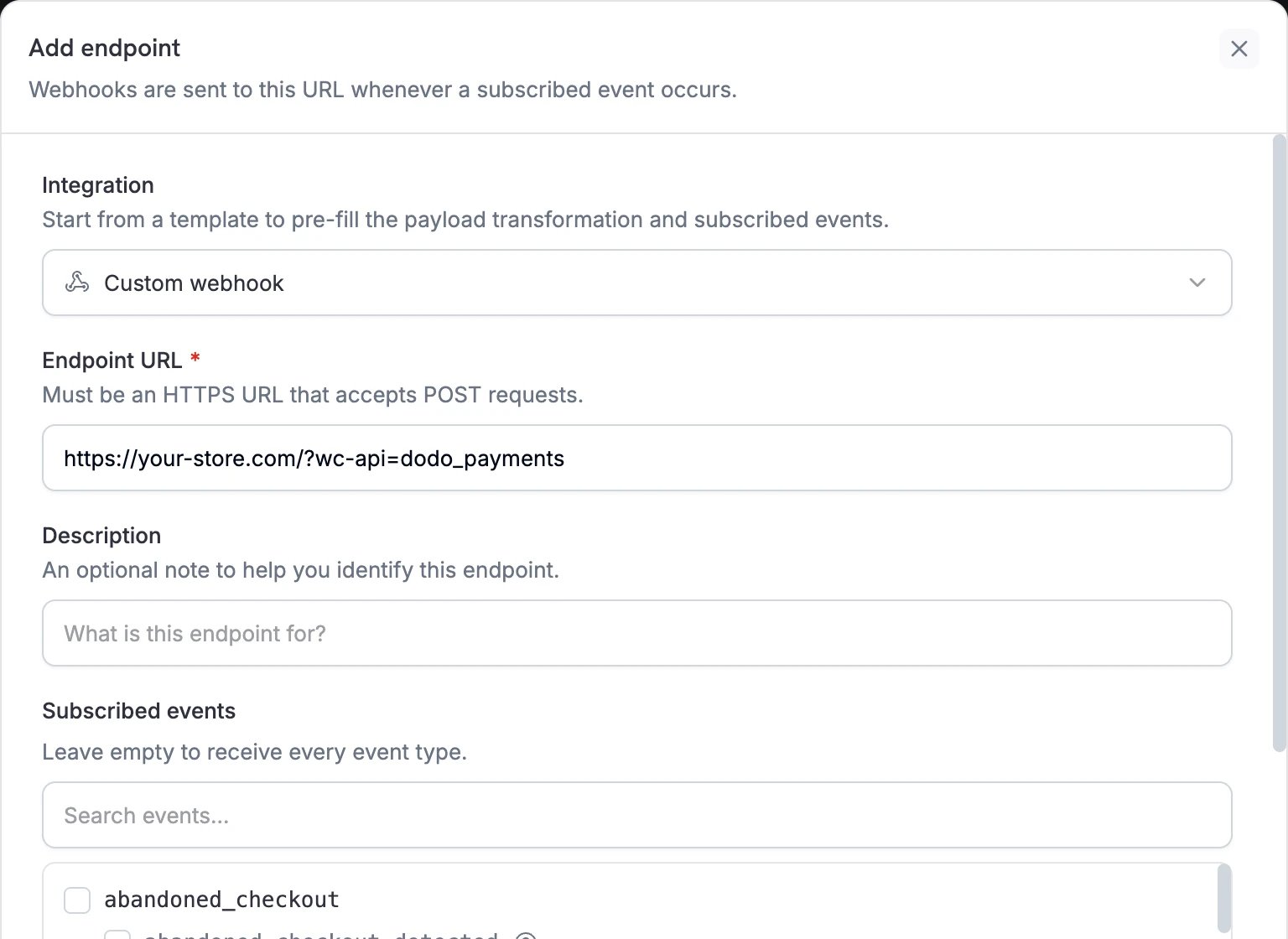
In the Dodo Payments dashboard, still in live mode, go to Developer → Webhooks and click Add endpoint.
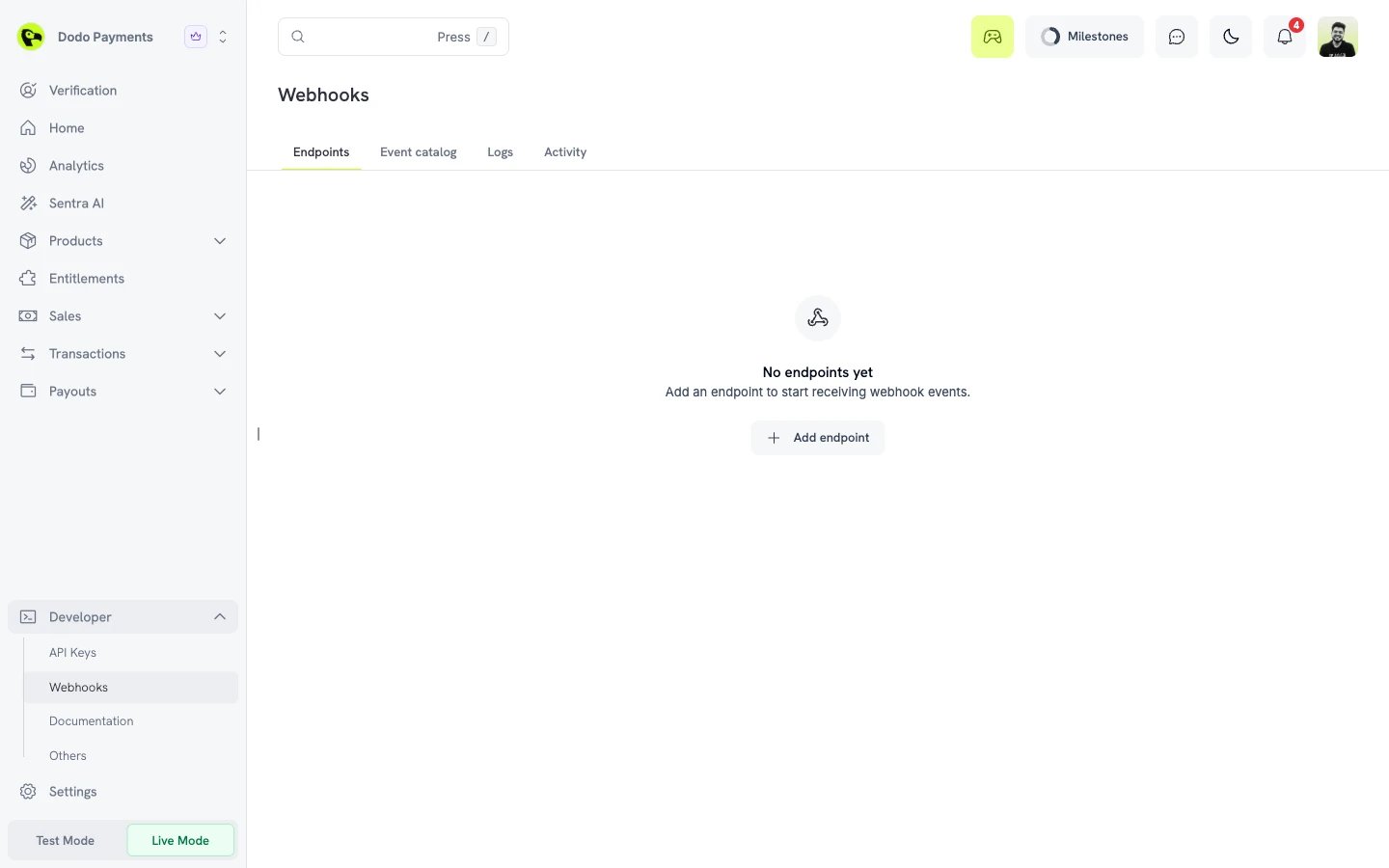
-
Paste the URL from step 8 into Endpoint URL. Leave Subscribed events empty to receive every event, or select only the payment, refund, and subscription events, which are the events the plugin handles. Then click Create endpoint.
-
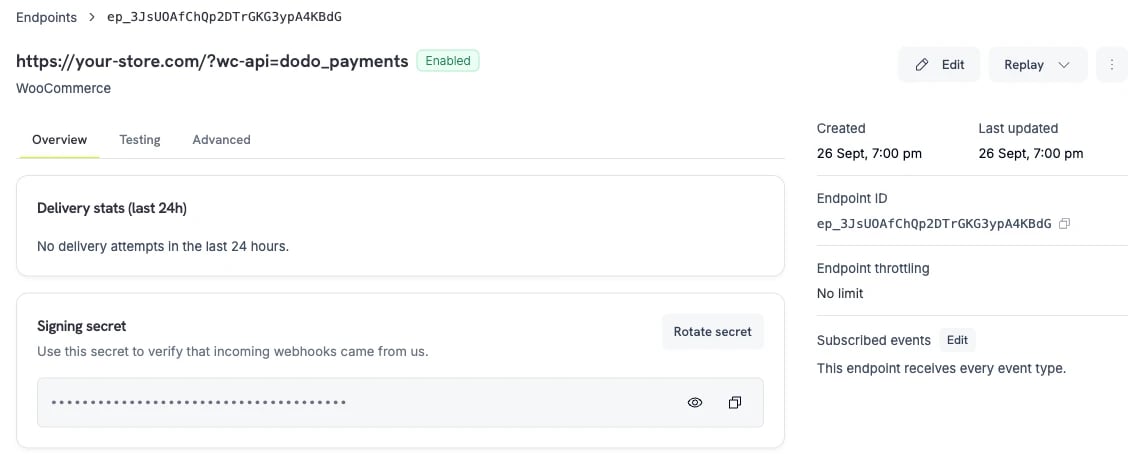
The endpoint’s Overview tab opens. Under Signing secret, click the eye icon to reveal the secret, then click the copy icon.
-
Paste the secret into Live Webhook Signing Key in the plugin settings, then click Save changes.

-
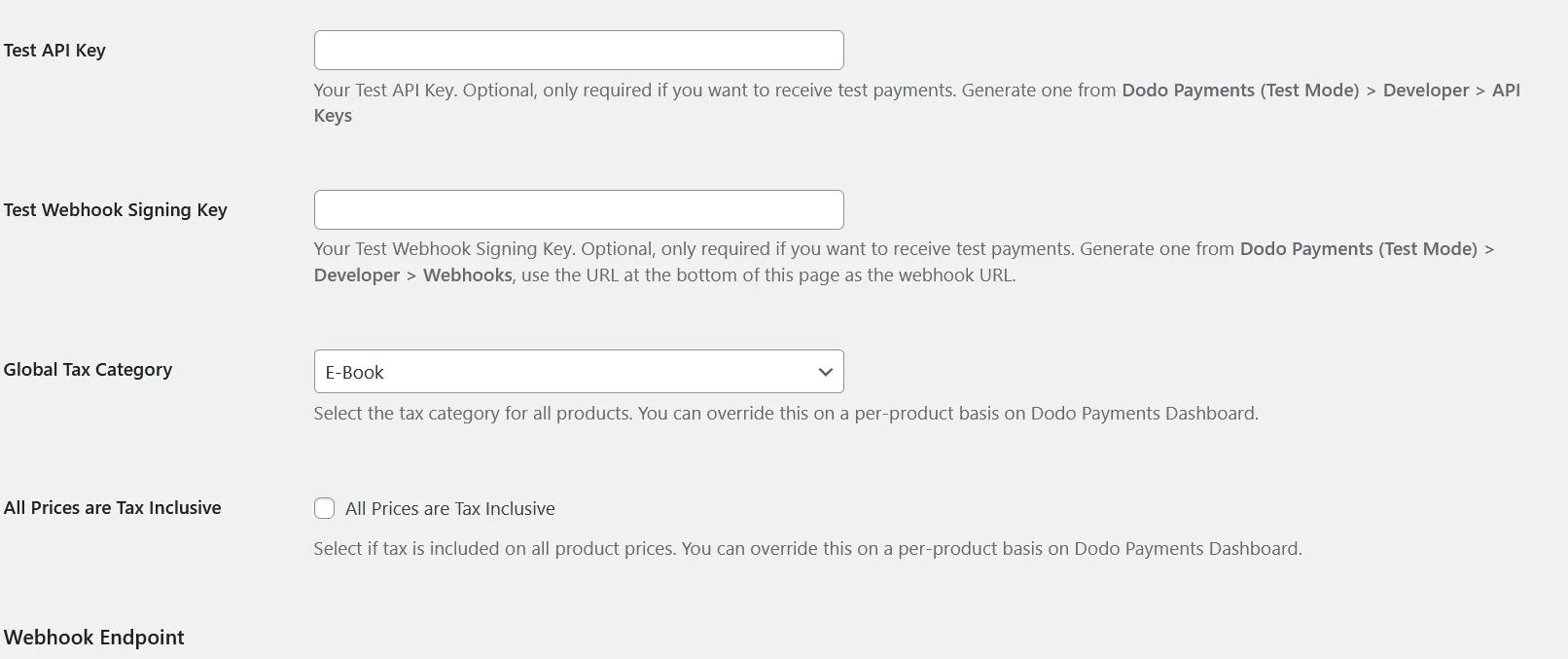
Review Global Tax Category and All Prices are Tax Inclusive. The plugin applies them when it creates a product in Dodo Payments, which happens the first time a customer checks out with the product. After that, the product keeps the tax settings it has in the Dodo Payments dashboard, where you can change them per product. Test API Key and Test Webhook Signing Key are needed only for Test Mode.
Checkout Options
From version 0.6.0, the plugin settings also set the checkout session options for your store. Each group is a collapsible section:- An option left empty or at Default isn’t sent, so Dodo Payments applies its own default. A store that doesn’t change these settings sends the same checkout request as before.
- Return URL defaults to the WooCommerce order received page. You can use the placeholders
{order_id},{order_key}, and{order_number}in it and in Custom Cancel URL. - If the customer cancels decides where a customer goes after leaving the checkout page: back to the order pay page to retry, or to the cart with the order cancelled, or to a custom URL. By default, no cancel URL is sent.
- Company Name is sent only on orders that also have a tax ID, because the checkout session requires a tax ID with a business name.
- Reset to defaults, next to Save changes, sets every checkout option and feature flag back to its default. Your API keys, webhook signing keys, and tax settings are kept.
To take test payments, turn on Test Mode in the plugin settings. The plugin then uses Test API Key and Test Webhook Signing Key, and connects to the Dodo Payments test environment. Test mode has its own API keys and webhook endpoints. To get them, turn off the Live Mode switch in the dashboard, follow steps 4 to 12 in test mode, and paste the values into the test fields. Turn off Test Mode before you go live.
You’re All Set!
Customers can now choose Dodo Payments at checkout.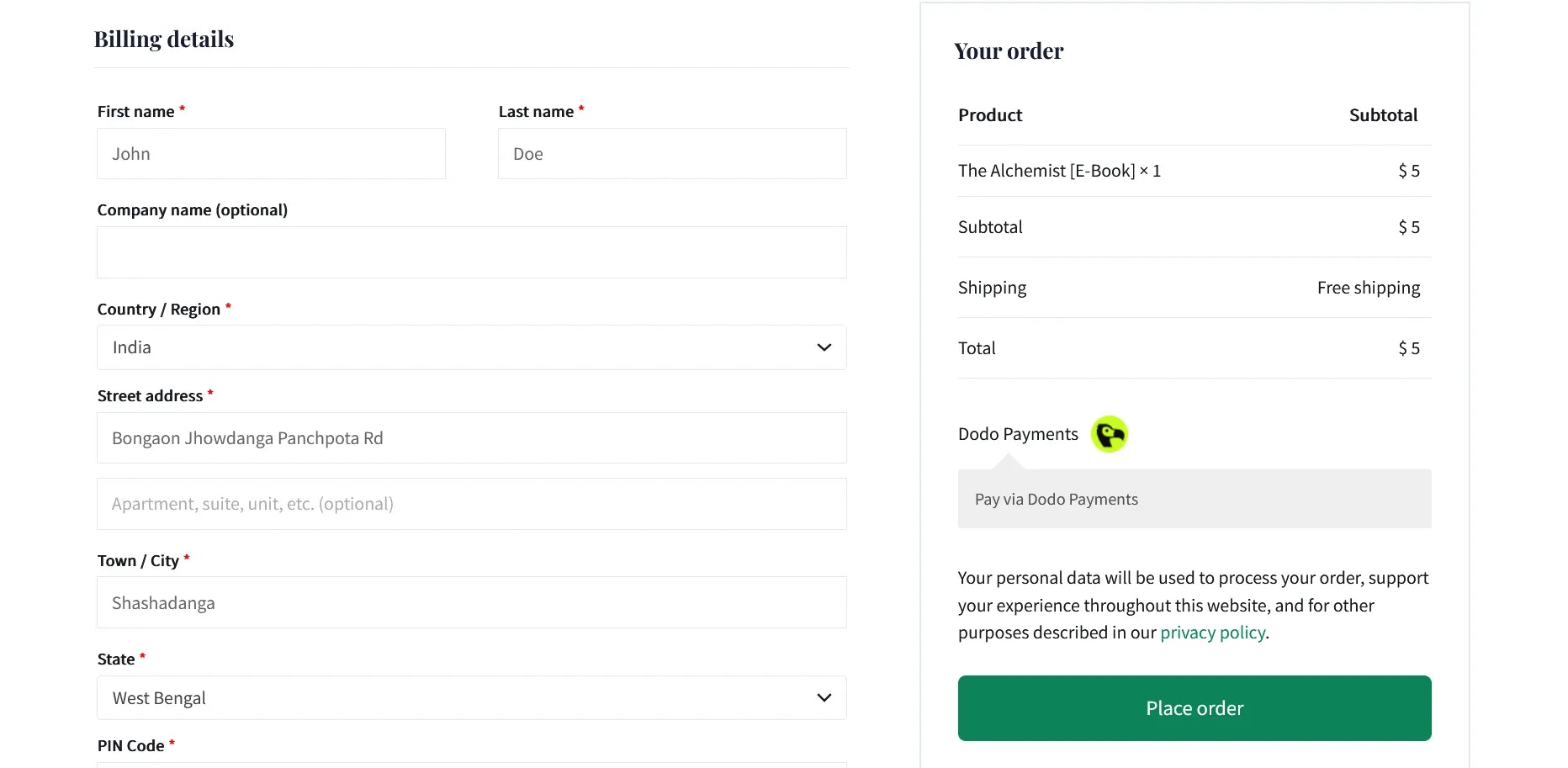
Key Features
- Hosted Checkout: Customers pay on a Dodo Payments checkout page, then return to your store’s order confirmation page, or to the Return URL you set.
- Multiple Payment Methods: The checkout shows the payment methods available for each customer’s location, currency, and device.
- Order Status Sync: Webhooks set the order to Completed, Processing, Failed, or Cancelled as the payment status changes. Failed and cancelled payments return the items to stock.
- Refunds: Issue refunds from the Dodo Payments dashboard. When a refund succeeds, the plugin sets the order to Refunded.
- Subscriptions: With WooCommerce Subscriptions, status changes sync in both directions, including when a subscription is cancelled, suspended, or reactivated. Changes to subscription dates in WooCommerce aren’t synced.
- Order Notes: The plugin adds order notes for each checkout session, status change, and error, so you can follow each payment from the order page.
- Multi-currency Support: Products sync to Dodo Payments in your WooCommerce store currency. The Allow Currency Selection flag controls whether customers can change the currency at checkout.
Troubleshooting
Common Issues
-
Payment Processing Failures
- Check that the API key matches the plugin mode. With Test Mode off, the plugin uses Live API Key, which must come from the dashboard in live mode. With Test Mode on, it uses Test API Key.
- Check the order notes. When the plugin can’t create a checkout, it adds a note with the error, such as one that starts with
Dodo Payments Error:. - If Dodo Payments doesn’t appear at checkout, check that your checkout page uses the classic checkout, not the Checkout block.
- If the order has a discount code, check that it’s a single percentage code.
- Live payments start after your account passes Account Verification.
-
Webhook Synchronization Problems
- Check that Endpoint URL is the exact URL under Webhook Endpoint in the plugin settings.
- Check that the signing key in the plugin matches the endpoint’s Signing secret, and that both come from the same mode.
- Check your PHP error log for lines that start with
Dodo Payments:, such asDodo Payments: Could not verify webhook event. From version 0.6.1, the plugin returns401when verification fails in both live mode and Test Mode, so the Dodo Payments logs show the delivery as failed and Dodo Payments retries it. In earlier versions, live mode returns200even when verification fails, so the logs show the delivery as successful. - Check that your site has a valid SSL certificate. Endpoint URL accepts only HTTPS URLs.
- Check that your server, firewall, and security plugins accept POST requests to the webhook URL from the Dodo Payments IP addresses.
- Open the Logs tab in Developer → Webhooks to see each delivery and your site’s response.
Support Resources
For more help:- Email support@dodopayments.com.
- Read the Dodo Payments documentation.
Maintenance Best Practices
- Update the plugin when a new version is released, to get security fixes and new features.
- Test all payment flows in Test Mode before you take live payments.
- Keep WordPress and WooCommerce up to date.
- Back up your site regularly.
- Watch your orders and the Dodo Payments dashboard for unusual activity.
- Store API keys securely, and never share them publicly.